DISC vs MBTI: Which Personality Framework Fits Your Hiring Pipeline
In the competitive landscape of talent acquisition, understanding candidates beyond their resumes is paramount. As a talent acquisition lead, you're constantly seeking tools that offer deeper insights into personality, work style, and potential team fit. Two widely recognized psychometric frameworks often come to mind: DISC® and MBTI®. But which one truly aligns with your hiring pipeline's needs, and how can they enhance your recruitment strategy? This article delves into both, providing a practical comparison to help you make an informed decision and discover how EQIQs™ elevates these insights.
Understanding DISC® in Talent Acquisition
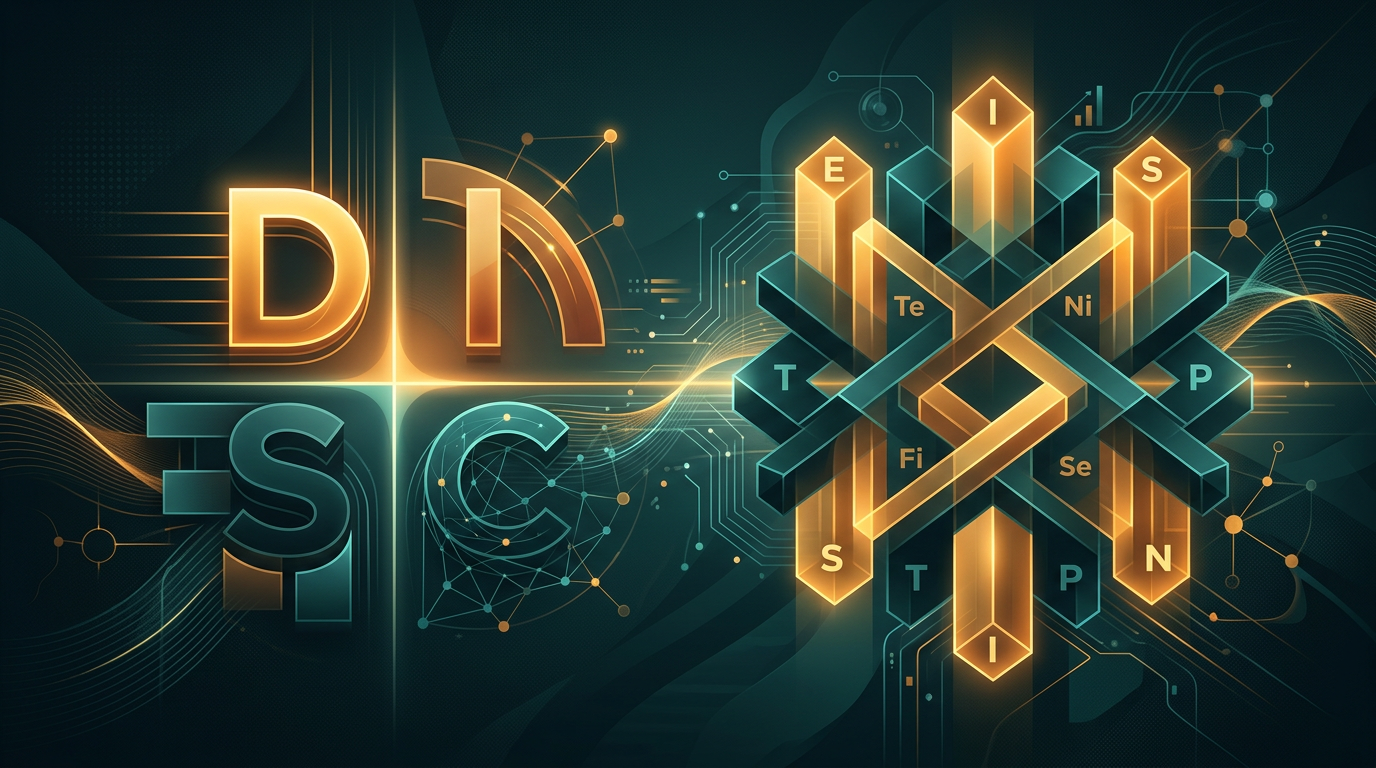
The DISC® assessment is a behavior-based psychometric tool that categorizes observable behaviors into four primary styles: Dominance (D), Influence (I), Steadiness (S), and Conscientiousness (C). Developed from the work of psychologist William Moulton Marston, it focuses on how individuals approach tasks and interact with others in their environment.
The Four DISC® Styles
- Dominance (D): Individuals prioritize results, take charge, and thrive on challenges. They are often direct, competitive, and decisive. In a hiring context, this might indicate a strong leader or someone who can drive projects forward.
- Influence (I): These individuals are sociable, persuasive, and optimistic. They enjoy collaboration and are often effective communicators and networkers. They typically excel in roles requiring strong interpersonal skills and teamwork.
- Steadiness (S): Characterized by patience, loyalty, and a cooperative nature, S-styles prefer stability and predictable environments. They are excellent team players, supportive, and reliable, often bringing consistency to a role.
- Conscientiousness (C): Individuals are analytical, precise, and systematic. They value accuracy, quality, and expertise, often excelling in roles requiring meticulous attention to detail and adherence to standards.
Benefits of DISC® for Hiring
DISC® offers several advantages for talent acquisition:
- Behavioral Focus: It describes how people behave, making it easier to predict workplace conduct and team dynamics. This can be directly mapped to job requirements and team compositions.
- Simplicity and Accessibility: DISC® is relatively straightforward to understand and apply, leading to quicker insights and easier interpretation for hiring managers.
- Predicting Performance: By understanding a candidate's natural behavioral style, recruiters can better assess their fit for roles requiring specific interaction patterns or approaches to problem-solving. For instance, a sales role might benefit from a high 'I' style, while a quality assurance role could thrive with a 'C' style.
- Team Dynamics: DISC® can highlight potential synergy or friction within existing teams, allowing you to hire for complementary styles that build a more balanced and productive unit. Studies suggest that teams with diverse behavioral styles often outperform homogenous ones.
Exploring MBTI® in Talent Acquisition
The MBTI® (Myers-Briggs Type Indicator®) is a self-report questionnaire designed to indicate different psychological preferences in how people perceive the world and make decisions. Based on Carl Jung's theory of psychological types, it categorizes individuals into one of 16 personality types using four dichotomies.
The Four MBTI® Dichotomies
- E (Extraversion) or I (Introversion): How individuals focus their energy. Extraverts are energized by social interaction, while Introverts are energized by solitude and reflection.
- S (Sensing) or N (Intuition): How individuals perceive information. Sensors focus on concrete facts and details, while Intuitives focus on patterns, possibilities, and abstract concepts.
- T (Thinking) or F (Feeling): How individuals make decisions. Thinkers prioritize logic, objective analysis, and fairness, while Feelers prioritize values, harmony, and impact on people.
- J (Judging) or P (Perceiving): How individuals prefer to live their outer life. Judgers prefer structure, planning, and closure, while Perceivers prefer flexibility, spontaneity, and keeping options open.
Benefits of MBTI® for Hiring
While MBTI® is often used for personal development, it offers valuable insights for talent acquisition:
- Understanding Cognitive Preferences: MBTI® helps understand how candidates prefer to process information and make decisions, which can be critical for complex roles. For example, an 'N' type might excel in innovation, while an 'S' type might be ideal for roles requiring meticulous execution.
- Communication Styles: Knowing a candidate's MBTI® type can offer clues about their preferred communication style, aiding in better interview techniques and future team interactions.
- Self-Awareness and Development: Candidates who understand their MBTI® type often have greater self-awareness, which can be a valuable trait in any role, indicating a propensity for growth and self-improvement.
- Long-Term Fit: MBTI® can provide a broader understanding of a candidate's underlying motivations and preferences, which might contribute to longer-term job satisfaction and cultural fit.
Explore your working dynamic
Start free work assessmentDISC® vs. MBTI®: Which Fits Your Pipeline?
Both DISC® and MBTI® offer unique lenses through which to view potential hires, but they serve different primary purposes in the recruitment process.
- Focus: DISC® primarily focuses on observable behaviors in the workplace, making it excellent for assessing immediate fit with job tasks and team dynamics. MBTI® delves into underlying preferences and motivations, offering insights into cognitive processes and broader personality traits.
- Complexity: DISC® is generally considered simpler and quicker to interpret, providing actionable insights into daily interactions. MBTI® provides a more nuanced, deeper dive into personality, which can require more understanding to apply effectively in a hiring context.
- Application in Hiring: If your primary goal is to assess how a candidate will act in a specific role or team, DISC® often provides more direct, actionable data points. If you're looking for a deeper understanding of a candidate's thinking style, decision-making process, and long-term potential for growth, MBTI® can be invaluable.
- Validity and Reliability: Both tools have undergone scrutiny regarding their psychometric properties. While MBTI® has faced some criticism for its dichotomous nature and test-retest reliability, DISC® generally focuses on scales of behavior, often making it easier to demonstrate empirical validity in workplace settings.
Practical Tips for Talent Acquisition Leads
- Define Your Needs First: Before choosing a framework, clearly articulate what you need to learn about candidates. Are you looking for behavioral indicators, cognitive preferences, or both?
- Complement, Don't Compete: Many organizations find that using both types of assessments, or a platform that integrates multiple frameworks, provides the most comprehensive view. For example, DISC® might show how someone leads, while MBTI® might explain why they prefer that leadership style.
- Use as a Guide, Not a Gatekeeper: Assessments should inform your hiring decisions, not be the sole determinant. They are powerful conversation starters for interviews, allowing you to ask targeted questions to validate results.
- Integrate with EQIQs™: This is where EQIQs™ truly shines. We combine 21 psychometric frameworks, including the powerful insights of DISC® and MBTI®, along with other essential tools like the Love Languages® framework and various emotional intelligence assessments. This holistic approach provides a comprehensive Relationship Intelligence profile, giving you an unparalleled understanding of each candidate. You can explore EQIQs™ plans to see how our integrated platform works.
- Candidate Experience: Ensure the assessment process is transparent and positive for candidates. Explain the purpose and how the insights will be used. Offering feedback, even if they aren't hired, can enhance your employer brand. Our platform makes it easy for candidates to take our free psychometric quiz and understand their own profiles.
The EQIQs™ Advantage: Beyond DISC® and MBTI®
While DISC® and MBTI® are powerful tools, relying on a single framework can provide an incomplete picture. EQIQs™ offers a revolutionary approach by integrating 21 psychometric frameworks. This comprehensive strategy allows you to:
- Gain Holistic Insights: Understand not just observable behaviors (DISC®) or cognitive preferences (MBTI®), but also emotional intelligence, communication styles (like Love Languages®), stress responses, and more. This breadth ensures a nuanced understanding of a candidate's full potential and fit.
- Enhance Predictive Power: By layering insights from multiple assessments, EQIQs™ provides a far more robust predictive model for job performance, team collaboration, and cultural alignment. You're not just hiring for skills, but for a complete person who will thrive in your environment.
- Streamline Your Process: Our platform simplifies the administration and interpretation of complex psychometric data, presenting it in an intuitive, actionable format for talent acquisition leads. This means less time sifting through reports and more time focusing on top-tier candidates.
- Identify Undiscovered Potential: By looking at a broader range of attributes, EQIQs™ helps you uncover hidden talents and strengths that might be missed by single-framework assessments, ensuring you don't overlook exceptional candidates. Learn more in our FAQ about our methodology.
Conclusion
Choosing between DISC® and MBTI® for your talent acquisition pipeline depends on your specific needs: DISC® for observable behaviors and immediate job fit, MBTI® for cognitive preferences and deeper personality insights. However, the most powerful strategy is not to choose between them, but to integrate them and go even further. EQIQs™ provides this capability, delivering a holistic, data-driven approach to understanding talent through our unique Relationship Intelligence platform. By leveraging the combined power of 21 psychometric frameworks, you can make more informed hiring decisions, build stronger teams, and ultimately drive greater organizational success.
Ready to transform your hiring process with unparalleled insights? Create your free account today and discover the EQIQs™ difference. Start building smarter teams, faster, with a deeper understanding of every candidate.
Score your team's compatibility
See how your team dynamics measure up across 21 psychometric frameworks.
Recommended Assessment
Workplace Compatibility Assessment
Discover how your work style aligns with colleagues and managers.
Related Compatibility Pairings
Explore how different personality types pair together:
Frameworks in this article
Deep-dive into the science behind every model referenced above.
Explore EQIQs
Enjoyed this article? Share it with your network.
Weekly Relationship Intelligence + Free 14-day Trial
Subscribe and we'll automatically start your free 14-day Individual Toolkit trial (full MBTI, compatibility scoring, AI coach — no card required) and send weekly insights, promo codes, and shareable reads.
Magic sign-in link sent to your inbox. No spam. Unsubscribe anytime.